How Often Is ChatGPT Inaccurate?
This page gives a practical, honest answer to a common question: how often should you expect incorrect or misleading information when using ChatGPT?
The goal is not to undermine trust, but to place it correctly.
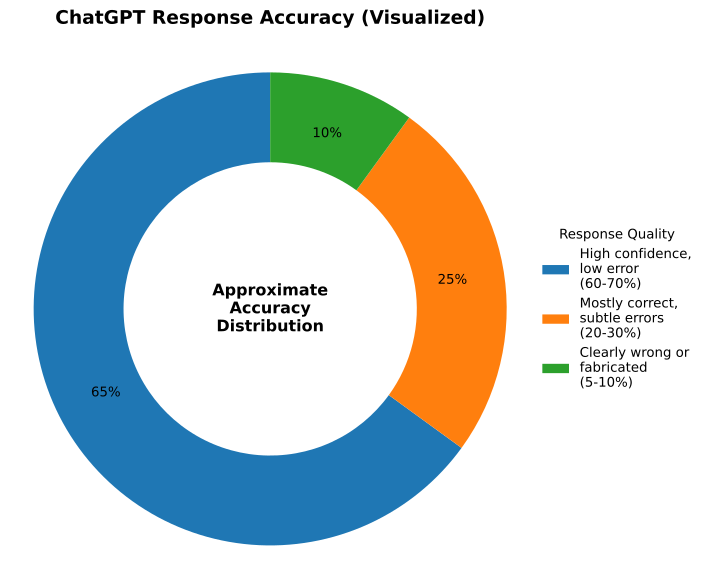
High-level summary
ChatGPT is often correct, sometimes subtly wrong, and occasionally very wrong. The most dangerous errors are not obvious mistakes, but confident overstatements about limits, guarantees, or internal behavior.
Rough accuracy bands
About 60 to 70 percent — High confidence, low error
These responses are typically accurate and reliable.
- Programming syntax and common libraries
- Basic math and logic
- Well-documented technical concepts
- Concrete transformation tasks
Errors here tend to be small and easy to spot.
About 20 to 30 percent — Mostly correct, but subtly misleading
This is the most important category to watch closely.
- System behavior explanations
- Architecture-level descriptions
- Capabilities and limitations
- Statements involving absolutes or guarantees
Answers here often sound authoritative, but may omit critical caveats or blur important distinctions.
About 5 to 10 percent — Clearly wrong or fabricated
These are outright failures.
- Undocumented internal mechanisms
- Precise limits or guarantees not publicly defined
- Obscure or highly recent information
These errors are less common, but more damaging if not challenged.
The pattern that causes trust issues
Most frustration does not come from obvious mistakes. It comes from answers that:
- Sound confident
- Are partially true
- Later require narrowing or qualification
When an answer is stated broadly and later defended using internal distinctions, it feels dishonest, even if the narrower claim is technically defensible.
The most honest mental model
Treat ChatGPT like a very fast, very articulate junior engineer with incomplete visibility into its own internals.
It excels at synthesis, explanation, and pattern recognition. It struggles with absolute guarantees, undocumented boundaries, and statements about what is or is not possible.
Practical rule of thumb
The more an answer removes your agency or claims impossibility, the more skepticism it deserves.
ChatGPT is best used as a collaborator, not an authority.